The Future of Dermatology
Join Dr. Faranak Kamangar, MD, every week as she chats with various guests about the future of dermatology. Each week, Dr. Kamangar and her guests cover topics from psoriasis, to eczema, to skin care, to AI, and more. Whether you’re a doctor or a patient, these episodes provide valuable information about your skin and how to navigate the world of dermatology.









Episodes

Aug 26, 2025
Aug 26, 2025
11 min
Summary
In this truncated replay from a session at the 2025 SF Derm Annual Conference, Dr. Lawrence Eichenfield discusses the latest advancements in the treatment of atopic dermatitis, focusing on new topical and systemic therapies, the role of corticosteroids, and the evolving perspectives on patient care. He highlights the importance of understanding both the benefits and concerns associated with various treatments, including the impact of media on patient perceptions.
Takeaways
- We have new topical agents for atopic dermatitis.- Topical corticosteroids are like hammers for eczema.- Topical steroid addiction is a real concern.- We have lots of options for atopic dermatitis.- New non-steroidals are being approved for younger patients.- Dupilomab shows promise in remission data.- Topical care remains a cornerstone of treatment.- We need to defend topical corticosteroids.- Long-term safety data is crucial for new therapies.- Patients often fear topical steroid withdrawal.
Chapters
00:00 - Introduction to Atopic Dermatitis Innovations02:46 - Emerging Therapies for Atopic Dermatitis04:33 - Topical Corticosteroids: Benefits and Concerns08:30 - Understanding Topical Steroid Withdrawal08:46 - New Non-Steroidal Treatments for Atopic Dermatitis

Aug 19, 2025
Aug 19, 2025
26 min
Summary
In this 100th episode of The Future of Dermatology, host Dr. Faranak Kamangar sits down - in person! - with Dr. Chandler Johnson and Producer Steph Cullen to spill the tea. They chat about the intersection of dermatology and pop culture, and the challenges of maintaining relationships in the medical field. They explore the importance of marriage satisfaction among medical professionals, share tips for effective skincare on a budget, and emphasize the need for ingredient awareness in skincare products. They close out the episode with a discussion on community engagement through art and the team's future endeavors.
Takeaways
- The podcast aims to blend science with a conversational tone.- Listeners are increasingly interested in the science behind skincare.- Pop culture influences patient choices in skincare and treatments.- Relationships in medicine can be challenging due to time constraints.- Marriage satisfaction rates vary significantly across medical specialties.- Dermatology ranks low in marriage satisfaction compared to other specialties.- Budget-friendly skincare options can be effective and accessible.- Ingredient awareness is crucial for effective skincare.- Community engagement through art can enhance the dermatology field.- The team is excited about future projects and community involvement.
Chapters
00:00 - Introduction to the Future of Dermatology Podcast02:45 - The Evolution of Dermatology Podcasts05:39 - Hot Topics in Dermatology and Pop Culture08:29 - Relationships and Challenges in Medical Careers11:27 - Marriage Satisfaction Among Medical Professionals14:02 - Skincare on a Budget: Effective Products16:55 - The Importance of Ingredient Awareness in Skincare19:45 - Art and Community Engagement in Dermatology22:39 - Conclusion and Future Endeavors

Aug 12, 2025
Aug 12, 2025
10 min
Summary
In this truncated replay from a session at the 2025 SF Derm Annual Conference, Dr. Daniel Butler discusses the relationship between allergic diseases, particularly chronic itch, and aging. He highlights the increasing prevalence of itch in older adults, the complexities of diagnosing and treating it, and the role of the immune system in this process. The conversation emphasizes the need for dermatologists to understand the unique challenges faced by geriatric patients and to improve the approach to treating chronic itch.
Takeaways
- Itching is a significant indicator of the aging process.- The population of older adults is rapidly increasing.- Chronic itch is often misdiagnosed or oversimplified.- Understanding the immune system's role is crucial in treating older patients.- Aging skin presents unique challenges for dermatologists.- The connection between itch and aging is well-documented.- Geriatric dermatology is relevant for all dermatologists.- Senescent cells contribute to chronic inflammation in aging.- Education on chronic itch needs to be improved in dermatology.- Historical perspectives on itch can inform current practices.
Chapters
00:00 - Introduction to Allergic Diseases in Dermatology02:57 - The Connection Between Itch and Aging05:38 - Historical Perspectives on Itch in Older Adults08:47 - Understanding the Aging Immune System and Inflammation

Aug 5, 2025
Aug 5, 2025
17 min
Summary
In this truncated replay from a session at the 2025 SF Derm Annual Conference, Dr. Daniel Butler, Dr. Lawrence Eichenfield, Dr. Jason Hawkes, Dr. Shyam Joshi, and Dr. Bob Geng discuss the workup for chronic urticaria, focusing on testing approaches, the role of biomarkers, and insights into immune deficiencies. These panelists share their experiences and guidelines, emphasizing the importance of symptomatic management and the variability of lab results in clinical practice.
Takeaways
- Initial workup for chronic urticaria often does not require specific testing.- Testing may be justified if standard treatments fail.- International guidelines differ from US guidelines regarding testing.- Biomarkers currently available are not reliable for treatment decisions.- Symptomatic management should be prioritized over extensive testing.- Clinical trials show variability in lab results over time.- Excessive lab testing can lead to confusion and unnecessary anxiety for patients.- Understanding patient history is crucial in diagnosing immune deficiencies.- The role of family history is significant in identifying X-linked conditions.- Collaboration among dermatologists is essential for advancing treatment approaches.
Chapters
00:00 - Introduction to Chronic Urticaria Workup02:47 - Testing Approaches and Guidelines for Chronic Urticaria05:41 - The Role of Biomarkers in Treatment Decisions08:16 - Clinical Insights on Immune Deficiencies11:14 - Variability in Lab Results and Clinical Trials14:07 - Conclusion and Future Directions in Dermatology

Jul 29, 2025
Jul 29, 2025
28 min
Summary
In this episode of the Future of Dermatology Podcast, Dr. Faranak Kamangar discusses the complexities of acne treatment during Acne Awareness Month. Joined by experts Dr. Ekama Carlson and Erica Dement, they explore patient perspectives, the role of technology in treatment, common myths surrounding acne, and the importance of addressing post-inflammatory erythema and scarring. The conversation highlights the emotional impact of acne on patients and the need for dermatologists to adapt to evolving treatment modalities and patient expectations.
Takeaways
- Over 80% of acne patients are interested in light-based procedures.- Acne significantly impacts patients' emotional well-being and social interactions.- There is a disconnect between patient expectations and what dermatologists can provide.- Younger patients often expect insurance to cover their acne treatments.- Social media trends influence patient perceptions and treatment choices.- Post-inflammatory erythema is a critical aspect of the acne journey.- Advanced technologies are changing the landscape of acne treatment.- Debunking myths about acne treatment is essential for patient education.- Higher cumulative doses of isotretinoin may lead to lower recurrence rates.- Early intervention in treating erythema can prevent scarring.
Chapters
00:00 - Introduction to Acne Awareness Month02:14 - Understanding Patient Perspectives on Acne04:02 - The Role of Technology in Acne Treatment08:41 - Debunking Myths and Trends in Acne Treatment10:56 - Exploring Advanced Treatment Modalities19:16 Addressing Post-Inflammatory Erythema and Scarring

Jul 22, 2025
Jul 22, 2025
17 min
Summary
In this episode of the Future of Dermatology Podcast, Dr. Faranak Kamangar and Dr. Tina Bhutani discuss the critical issues surrounding equity in dermatological clinical trials, particularly focusing on the underrepresentation of patients with skin of color and those with low body surface area in psoriasis studies. They explore the findings from the Visible and Spectrum trials, emphasizing the need for inclusivity in clinical research and the importance of reevaluating how psoriasis severity is assessed and treated. This conversation highlights the advancements in dermatological therapies and the ongoing challenges in ensuring equitable access to these innovations.
Takeaways
- There is significant under-representation in dermatology clinical trials.- Patients with skin of color often present with more severe psoriasis due to misdiagnosis.- The Visible trial focused on patients with skin of color to address these disparities.- Recruitment for clinical trials can be improved with targeted efforts.- Insurance companies often dictate treatment options based on outdated criteria.- Patients with low body surface area psoriasis are often overlooked in treatment decisions.- The International Psoriasis Council suggests reevaluating how psoriasis severity is assessed.- Innovations in therapy have outpaced our understanding of treatment criteria.- Empathy is crucial in understanding the impact of skin diseases on patients' lives.- Future dermatological practices must prioritize inclusivity and patient-centered care.
Chapters
00:00 - Introduction to Dermatology Innovations02:53 - Equity in Clinical Trials05:40 - The Visible Trial: Addressing Underrepresentation08:38 - The Spectrum Trial: Expanding Patient Inclusion11:46 - Reevaluating Psoriasis Severity and Treatment14:21 - Future Perspectives in Dermatology
Jul 15, 2025
Jul 15, 2025
19 min
Summary
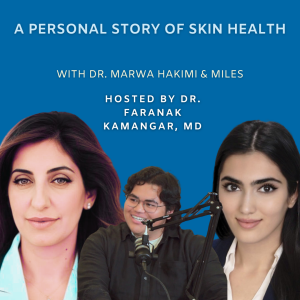
In this episode of the Future of Dermatology Podcast, Dr. Faranak Kamangar and Dr. Marwa Hakimi chat with Dr. Hakimi's patient, Miles, to discuss the personal journey of dealing with chronic itch and skin conditions like eczema. The conversation explores the emotional and physical challenges faced by people with eczema, the impact of skin conditions on daily life, and the importance of empathy in dermatological care. Miles shares their experiences with various treatments and the transformative effects of finding effective solutions, highlighting the need for a compassionate approach in medical practice.
Takeaways
- The journey of skin health is often complex and personal.- Chronic itch can significantly impact sleep and daily activities.- Patients often feel frustrated and anxious about their skin conditions.- Empathy from healthcare providers can transform patient experiences.- Effective treatments can lead to significant improvements in quality of life.- The emotional toll of skin conditions is often overlooked.- Personal experiences with skin issues can shape self-perception.- Communication between patients and doctors is crucial for effective care.- Finding the right treatment can be a long and challenging process.- Empathy in medicine fosters a better patient-provider relationship.
Chapters
00:00 - Introduction to the Journey of Skin Health02:42 - Understanding Itch: Personal Experiences and Challenges05:41 - The Impact of Itch on Daily Life and Sleep08:28 - Frustrations and Anxiety: Navigating Skin Conditions in Social Settings11:29 - Finding Effective Treatments: A Patient's Perspective13:50 - The Role of Empathy in Dermatological Care16:32 - Current Skin Health and Future Outlook

Jul 8, 2025
Jul 8, 2025
17 min
Summary
In this episode of the Future of Dermatology Podcast, Dr. Faranak Kamangar and Dr. Tina Bhutani discuss the latest advancements in dermatological treatments, focusing on the shift from traditional steroid-based therapies to innovative non-steroidal options. They explore the efficacy of new treatments, the importance of patient counseling, and the need for accessible and effective topical therapies. The conversation emphasizes the significance of setting realistic expectations for patients and the role of formulation in treatment success.
Takeaways
- The paradigm shift in dermatology is moving away from steroids to non-steroidal treatments.- Topical formulations must be elegant and user-friendly to ensure patient compliance.- Efficacy of new treatments can be seen as early as four weeks.- Setting low expectations can lead to higher patient satisfaction when results exceed them.- Patients often prioritize relief from itching over the appearance of their skin.- Non-steroidal treatments can be used safely on sensitive areas of the body.- Counseling patients on the use of medications can save time and improve outcomes.- Access to medications can be improved by documenting previous treatments.- The vehicle of a topical treatment is crucial for its effectiveness.- Investing in topical treatments is essential for the future of dermatology.
Chapters
00:00 - Introduction to Dermatology Innovations02:55 - The Shift from Steroids to Non-Steroidal Treatments05:42 - Efficacy and Expectations in Treatment08:42 - Patient Counseling and Treatment Compliance11:41 - Access and Practical Considerations in Dermatology14:38 - The Importance of Topical Treatments