The Future of Dermatology
Join Dr. Faranak Kamangar, MD, every week as she chats with various guests about the future of dermatology. Each week, Dr. Kamangar and her guests cover topics from psoriasis, to eczema, to skin care, to AI, and more. Whether you’re a doctor or a patient, these episodes provide valuable information about your skin and how to navigate the world of dermatology.









Episodes

Jul 1, 2025
Jul 1, 2025
18 min
Summary
In this episode of the Future of Dermatology podcast, Dr. Faranak Kamangar and Dr. Tina Bhutani discuss the complexities of topical non-steroidal treatments, particularly focusing on Zoryve (roflumilast). They explore the role of steroids in dermatology, the innovations in non-steroidal treatments, and the importance of understanding genital psoriasis. The conversation highlights the significance of formulation in treatment efficacy and patient compliance, emphasizing the need for awareness and education in dermatological care.
Takeaways
- Topical non-steroidals are gaining importance in dermatology.- Steroids will always have a role, but their overuse is problematic.- New non-steroidal treatments simplify patient care.- Formulation is key to the effectiveness of topical treatments.- Genital psoriasis is often overlooked but significant.- Patient compliance is crucial for treatment success.- Zoryve offers multiple formulations for different conditions.- Understanding the mechanism of action helps in treatment selection.- Education on genital psoriasis can improve patient outcomes.- Innovative treatments are essential for advancing dermatological care.
Chapters
00:00 - Introduction to Topical Non-Steroidals02:25 - The Role of Steroids in Dermatology05:58 - Innovations in Non-Steroidal Treatments10:08 - Understanding Genital Psoriasis12:32 - Formulations and Indications of Zoryve

Jun 24, 2025
Jun 24, 2025
18 min
Summary
In this truncated replay from the 2024 Practice Management Seminar, Dr. Teresa Fu shares the critical importance of sunscreen in skin health. She explores various types of sunscreens, their regulations, and the differences between US and international products. This presentation delves into the efficacy of UVA protection, debunks common myths about sunscreen safety, and addresses concerns regarding vitamin D absorption and environmental impacts. Practical tips for proper sunscreen application are also provided, emphasizing the need for adequate protection against UV radiation.
Takeaways
- Sunscreen is essential for skin health and protection.- There are significant differences between US and international sunscreens.- UVA protection is often inadequate in US products.- Sunscreens are generally safe and effective when used correctly.- Vitamin D levels can be monitored while using sunscreen.- Environmental concerns about sunscreen ingredients are nuanced.- Proper application of sunscreen is crucial for effectiveness.- Antioxidants in sunscreen can enhance skin protection.- Sunscreen should be reapplied regularly, especially during outdoor activities.- Education on sunscreen use is vital for public health.
Chapters
00:00 - Introduction to Sunscreen Importance02:36 - Sunscreen Regulations and Global Differences05:41 - Understanding SPF and UVA Protection08:16 - Visible Light and Skin Protection09:36 - Sunscreen Safety and Absorption Concerns11:46 - Vitamin D and Sunscreen Use12:52 - Environmental Impact of Sunscreens14:00 - Proper Sunscreen Application Techniques16:03 - Summary and Final Thoughts

Jun 17, 2025
Jun 17, 2025
16 min
Summary
In this episode of The Future of Dermatology Podcast, Dr. Faranak Kamangar discusses the transformative role of generative AI in dermatology, particularly through the use of Derm GPT. The conversation covers the evolution of health tech, the applications of AI in clinical practice, and the potential benefits for dermatologists in improving workflow and patient care. Dr. Kamangar emphasizes the importance of using precise data to enhance the accuracy of AI responses and the future implications of integrating AI into dermatological practices.
Access Derm GPT: https://www.dermgpt.com/
Takeaways
- Generative AI can significantly improve clinic flow.- Machine learning has traditionally been tedious and costly.- Generative AI allows for faster and more efficient data usage.- Derm GPT is based on extensive peer-reviewed research.- Using controlled data leads to more accurate AI outputs.- AI won't replace jobs, but those who use it will excel.- Derm GPT was developed to address specific clinic pain points.- AI can help streamline administrative tasks in dermatology.- Reducing time spent on EMRs can enhance work-life balance for physicians.- Dermpub aims to innovate how dermatological research is shared.
Chapters
00:00 - Introduction to the Future of Dermatology Podcast00:55 - Understanding Generative AI in Dermatology06:14 - The Evolution of Health Tech in Dermatology08:04 - Applications of Derm GPT in Clinical Practice14:03 - The Future of Dermatology and AI Integration
Jun 10, 2025
Jun 10, 2025
29 min
Summary
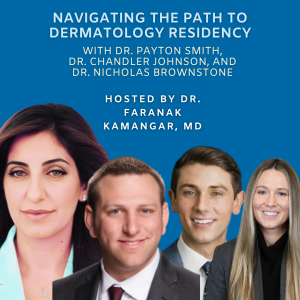
In this episode of the Future of Dermatology podcast, Dr. Faranak Kamangar hosts a Resident Takeover featuring Dr. Payton Smith and Dr. Chandler Johnson interviewing Dr. Nick Brownstone. The conversation covers essential insights for dermatology residents, including preparation strategies for residency, the importance of networking, and how to find one's niche within the field. Dr. Brownstone emphasizes the significance of mastering the fundamentals of medicine during intern year and shares valuable resources and advice for aspiring dermatologists. The episode concludes with reflections on the future of dermatology and the importance of enjoying the journey throughout the residency experience.
Find Dr. Brownstone's podcast, Cutaneous Miscellaneous Podcast at: https://dermsquared.com/podcasts/cutaneous-miscellaneous-podcasts
Takeaways
- Congratulations to you and everyone who's matched in dermatology.- Focus on being a good doctor first, then a dermatologist.- Intern year is crucial for building foundational medical skills.- Networking is essential in dermatology; start early.- Chase your passions, but they will find you naturally.- The future of dermatology is bright and full of opportunities.- Enjoy the journey, not just the destination.- Dermatology is a visual field; pattern recognition is key.- Use resources like Andrew's Atlas for studying skin diseases.- Don't worry too much; most worries never come true.
Chapters
00:00 - Introduction to the Resident Takeover Podcast01:05 - Preparing for Dermatology Residency06:58 - Intern Year Insights and Recommendations18:21 - Networking in Dermatology22:13 - Finding Your Niche in Dermatology25:50 - Passions and Future in Dermatology
Jun 3, 2025
Jun 3, 2025
20 min
Summary
In this episode of the Future of Dermatology podcast, Dr. Faranak Kamangar discusses the evolving landscape of skincare, emphasizing the importance of science in skincare products. The conversation highlights the shift towards science-backed skincare, the role of metabolism in skin health, and the significance of understanding the Krebs cycle in relation to skincare ingredients. Dr. Kamangar also explores how patients are becoming more informed about their skincare choices and the need for dermatologists to support scientifically validated products.
Takeaways
- There is a huge shift happening in the skincare world towards science.- Patients are becoming more sophisticated and want to know what they are putting on their skin.- Metabolism is becoming a key focus in skincare, reflecting trends in the fitness industry.- Ingredients need to be metabolically active and able to penetrate the skin effectively.- The Krebs cycle is crucial for understanding how skincare ingredients work at a cellular level.- Regular exercise can naturally boost skin metabolism and overall health.- Topical ingredients must be backed by clinical data to ensure efficacy.- Holistic approaches to skincare are gaining popularity, moving away from harsh treatments.- The future of dermatology will focus on personalized skincare formulations.- 2026 will see a rise in hero ingredients that support skin metabolism.
Chapters
00:00 - Introduction to the Future of Dermatology Podcast00:55 - The Shift Towards Science in Skincare02:43 - Metabolism's Role in Skincare08:17 - Understanding the Krebs Cycle and Skincare Ingredients19:09 - The Future of Dermatometabolics
May 27, 2025
May 27, 2025
25 min
Summary
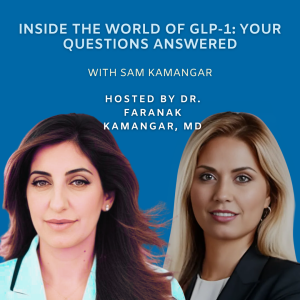
In this episode of the Future of Dermatology podcast, Sam Kamangar asks Dr. Faranak Kamangar your burning questions about GLP-1 and GIP medications. They discuss the evolving landscape of dermatology, explore the implications of these medications for weight loss, metabolism, and skin health, as well as the aesthetic considerations and potential side effects associated with their use. The episode emphasizes the importance of understanding who qualifies for these medications and the need for a holistic approach to health and beauty.
Takeaways
- The conversation around beauty is shifting from surface-level treatments to internal health.- GLP-1 medications are gaining popularity for their weight loss benefits.- FDA-approved medications undergo rigorous testing for safety and efficacy.- Weight loss is a chronic condition that requires ongoing management.- Muscle mass is crucial for maintaining metabolism as we age.- GLP-1 medications can have side effects, including gastrointestinal issues.- Hydration and diet play significant roles in managing side effects of GLP-1 medications.- Aesthetic concerns, such as 'Ozempic face,' are emerging with the use of GLP-1 medications.- Not everyone needs to be on GLP-1 medications; they are for those with obesity or diabetes.- The hype around GLP-1 medications may lead to overuse and shortages for those who truly need them.
Chapters
00:00 - Introduction to Dermatology and GLP-1 Medications03:04 - Understanding GLP-1 and GIP Medications05:57 - The Role of GLP-1 in Dermatology08:55 - Who Should Use GLP-1 Medications?11:59 - Metabolism and Chronic Conditions14:58 - The Hype Around GLP-1 Medications17:59 - Aesthetic Considerations with GLP-1 Use20:49 - Managing Side Effects of GLP-1 Medications

May 13, 2025
May 13, 2025
11 min
Summary
In this session from the 2024 SF Derm Society Annual Meeting, Dr. Lindy Fox discusses the critical topic of angioinvasive fungal infections, particularly in immunosuppressed patients. This truncated session covers the clinical presentation, diagnostic challenges, and emerging resistance patterns in fungal infections. Dr. Fox emphasizes the importance of recognizing the signs of invasive fungal infections and the need for broad coverage in treatment, especially given the rising rates of antifungal resistance. The episode concludes with key takeaways for dermatologists and a reminder of the podcast's educational purpose.
Takeaways
- Angioinvasive fungal infections are a significant concern for immunosuppressed patients.- Acute respiratory infections can increase the risk of invasive fungal infections.- Candida auris is a new resistant strain to be aware of.- Differentiating fungal organisms on H and E is unreliable; cultures are essential.- Antifungal resistance is on the rise, impacting treatment options.- Voreconazole does not treat mucor, leading to potential breakthrough infections.- L. prolificans is pan-resistant and often fatal.- Morphology is crucial in guiding the differential diagnosis of fungal infections.- Sweet syndrome can mimic other conditions histologically.- The podcast aims to educate and is not a substitute for medical advice.
Chapters
00:00 - Introduction to the Future of Dermatology Podcast00:53 - Understanding Angioinvasive Fungal Infections03:49 - Clinical Pearls for Diagnosing Fungal Infections08:02 - Diagnostic Considerations in Fungal Infections10:06 - Therapeutic Considerations and Resistance Patterns
May 6, 2025
May 6, 2025
25 min
Summary
In this episode of the Future of Dermatology Podcast, Dr. Faranak Kamangar discusses the evolving landscape of dermatology with a focus on incretin medications, particularly GLP-1 agonists. This podcast explores the historical context of these medications, their role in weight management, and the implications for dermatological health. Dr. Kamangar addresses the side effects associated with these treatments, including the phenomenon known as 'Ozempic face,' and offers recommendations for maintaining healthy weight and skin health.
Takeaways
- Incretin medications include GLP-1 agonists and GIPs.- GLP-1 agonists have been used since 2005 for diabetes.- Weight loss medications can have significant side effects.- Rapid weight loss can lead to 'Ozempic face' due to fat loss.- Maintaining muscle mass is crucial during weight loss.- Long-term use of weight loss medications may be necessary.- Lifestyle changes are essential for sustainable weight management.- Dermatologists should be aware of the metabolic effects of these medications.- Natural fat in the face is important for youthful appearance.- Body contouring devices can help target specific fat areas.
Chapters
00:00 - Introduction to Dermatometabolic Series02:47 - Understanding Incretin Medications06:02 - The Role of GLP-1 Agonists in Weight Management09:10 - Exploring Side Effects and Safety Profiles12:08 - Comparative Effectiveness of Semaglutide and Terzepatide14:48 - Ozempic Face: Causes and Solutions21:07 - Recommendations for Healthy Weight Management