The Future of Dermatology
Join Dr. Faranak Kamangar, MD, every week as she chats with various guests about the future of dermatology. Each week, Dr. Kamangar and her guests cover topics from psoriasis, to eczema, to skin care, to AI, and more. Whether you’re a doctor or a patient, these episodes provide valuable information about your skin and how to navigate the world of dermatology.
Listen on:









Episodes
Tuesday Mar 25, 2025
Tuesday Mar 25, 2025
Summary
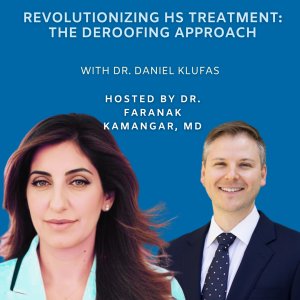
In this episode of the Future of Dermatology Podcast, we share a truncated replay of Dr. Daniel Klufas's session from the SF Derm 2024 Annual Conference on the management of Hydradenitis Suppurativa (HS) with a focus on the surgical technique of deroofing. This session covers the importance of medical optimization, patient selection, and the benefits of deroofing, including low recurrence rates and high patient satisfaction. Dr. Klufas emphasizes the need for thorough preoperative planning and the role of patient expectations in surgical outcomes.
Takeaways
- HS was long considered a purely surgical disease.- Recent strides in medical management can delay surgical intervention.- Deroofing is a critical procedure for managing HS.- Medical optimization is essential before considering surgery.- Patients should be well-informed about their treatment options.- Deroofing can be performed on solitary or regional lesions.- Patient satisfaction rates for deroofing are high.- Recurrence rates for deroofing are generally low.- Preoperative planning is crucial for successful outcomes.- Pain management post-deroofing is often less than expected.
Chapters
00:00 - Introduction to the Future of Dermatology Podcast01:00 - Understanding Hydradenitis Suppurativa (HS) and Surgical Management03:14 - Medical Optimization and Patient Selection for Deroofing05:01 - Deroofing Technique and Surgical Pearls08:15 - Patient Satisfaction and Outcomes of Deroofing

Tuesday Mar 18, 2025
Tuesday Mar 18, 2025
Summary
In this episode of the Future of Dermatology podcast, we hear from Dr. Akhil Wadhera, about the innovative use of lasers in treating Hidradenitis Suppurativa (HS), from his session at SF Derm Annual Meeting in 2024 . Dr. Wadhera highlights the significant impact of HS on patients' quality of life and explores the advantages of laser hair removal as a treatment option. He shares clinical evidence supporting the effectiveness of laser treatments and emphasizes the importance of integrating these technologies into dermatological practices for improved patient outcomes.
Takeaways
Lasers can significantly improve the management of HS.
HS is a debilitating condition with a high financial burden.
Laser hair removal is a viable treatment for HS.
Patients report high satisfaction with laser treatments.
Clinical studies show promising results for laser hair removal in HS.
Integrating lasers into dermatology can enhance patient care.
The mechanism of laser hair removal targets inflammation and hair follicles.
Long-term treatment can lead to sustained improvements in HS.
Collaboration among dermatologists is key to advancing treatment options.
Continued research is essential for optimizing laser therapies.
Chapters
00:00 - Introduction to the Future of Dermatology Podcast01:16 - Exploring Lasers in Dermatology02:46 - The Impact of Hidradenitis Suppurativa (HS)04:48 - Mechanisms and Benefits of Laser Hair Removal06:39 - Clinical Evidence and Patient Outcomes09:26 - Conclusion and Future Directions in HS Treatment

Tuesday Mar 11, 2025
Tuesday Mar 11, 2025
Summary
In this episode of the Future of Dermatology podcast, Dr. Faranak Kamangar interviews Dr. Natasha Atanaskova Mesinkovska MD PhD, a renowned dermatologist and researcher. They discuss Dr. Mesinkovska's journey in dermatology, her passion for hair research, the challenges of aging in dermatology, and the implications of chemical sunscreens on hair health. The conversation highlights the evolving landscape of dermatology, the importance of patient care, and the need for continued education in the field. In this conversation, the speakers delve into the evolving landscape of scalp care and its intersection with skincare trends, discussing the importance of scalp health and the various treatments available, including PRP and minoxidil. They also engage in a rapid-fire segment addressing treatment approaches for alopecia areata in different age groups, emphasizing the significance of addressing comorbidities and the potential of new treatments like JAK inhibitors. The discussion concludes with an exploration of exciting innovations in dermatology, including advancements in non-invasive imaging and AI technologies.
Takeaways
Dr. Mesinkovska emphasizes the importance of mentorship in medicine.
The podcast aims to create a positive environment for dermatology professionals.
Aging affects not just skin but also hair health.
Chemical sunscreens may have adverse effects on hair conditions.
The landscape of hair research is evolving with new treatment options.
Dermatology interfaces with patients' psychological perceptions of aging.
The importance of understanding the social aspects of dermatological conditions.
Dr. Mesinkovska's journey reflects the American dream in medicine.
The role of AI in enhancing dermatological practices is promising.
Frontal fibrosing alopecia is a growing concern in dermatology.
Scalp care is increasingly recognized as part of skincare.
PRP treatments are popular for scalp rejuvenation.
Regular hair washing is essential for scalp health.
Preservatives in products serve important functions.
Oils and ceramides are crucial for scalp hydration.
Anti-dandruff shampoos can help maintain scalp balance.
Atopy is a significant factor in alopecia in children.
Minoxidil can help maintain hair density.
New technologies in dermatology are promising.
The future of dermatology is bright with innovative treatments.
Chapters
00:00 - Introduction to the Future of Dermatology Podcast02:06 - Meet Dr. Natasha Mesinkovska: A Dermatology Pioneer05:15 - The Journey of a Dermatologist: Passion and Purpose09:14 - The Evolving Landscape of Hair Research12:36 - Aging and Its Impact on Dermatology14:08 - Chemical Sunscreens and Their Effects on Hair Health16:56 - Navigating Scalp Care and Skincare Trends21:23 - Rapid Fire on Alopecia Areata Treatment29:24 - Exciting Innovations in Dermatology

Tuesday Mar 04, 2025
Tuesday Mar 04, 2025
Summary
In this episode of the Future of Dermatology podcast, we revisit the SF Derm 2024 Annual meeting and hear from Dr. Haley Naik, MD, as she discusses the management of Hidradenitis Suppurativa (HS). Dr. Naik covers the importance of controlling inflammation with medical therapies, the role of biologics in treatment, and the clinical pearls for using TNF inhibitors effectively. She emphasizes the need for early intervention to prevent permanent disfigurement and the importance of optimizing medical management before considering surgical options.
Takeaways
Using medical therapies to control inflammation is crucial.
When to start a biologic is a common question.
Preventing permanent disfigurement is a key goal.
Adalimumab was the first FDA approved drug for HS.
Real world goals include reducing pain and symptoms.
Complete response means no pain and no new lesions.
Infliximab is the best biologic for moderate to severe HS.
Layering therapies is important for effective management.
Optimizing medical management is essential before surgery.
Chapters
00:00 - Introduction to the Future of Dermatology Podcast01:03 - Managing Hidradenitis Suppurativa (HS) with Medical Therapies04:35 - Understanding Biologics in HS Treatment09:17 - Clinical Pearls for TNF Inhibitors in HS11:35 - Optimizing HS Management Before Surgery

Tuesday Feb 25, 2025
Tuesday Feb 25, 2025
Summary
In this episode of the Future of Dermatology Podcast, we hear from Dr. Maria Aleshin who spoke at the Annual SF Derm Society's 2024 Meeting. She presents on Hidradenitis Suppurativa (HS) and various non-biologic treatment strategies. Dr. Aleshin covers practical approaches to managing HS flare-ups, long-term management considerations, and the role of antibiotics in treatment. She emphasizes the importance of personalized care and the need for a multifaceted approach to effectively address this challenging skin condition.
Takeaways
The pathogenesis of HS is multifactorial, requiring a comprehensive treatment approach.
Treatment stacking often involves combining medical, procedural, and lifestyle interventions.
Topical therapies like chlorhexidine and benzoyl peroxide are commonly recommended, but alternatives exist.
Systemic antibiotics are frequently used for managing HS flares.
Hormonal therapies, including oral contraceptives and spironolactone, can be effective for female patients with HS.
Metformin may be beneficial for patients with metabolic dysfunction associated with HS.
Isotretinoin is not a first-line treatment for HS due to mixed results.
Botulinum toxin can help reduce sweating and inflammation in HS patients.
Combination antibiotic therapy, particularly clindamycin and rifampin, shows high efficacy but has relapse risks.
Urtipenem is a powerful antibiotic reserved for severe HS cases as a bridge to surgery or biologics.
Chapters
00:00 - Introduction to the Future of Dermatology Podcast01:19 - Understanding Hidradenitis Suppurativa (HS) and Its Complexities07:10 - Treatment Strategies for Managing HS Flare-Ups10:21 - Long-Term Management of HS: Hormonal and Metabolic Considerations13:20 - Antibiotic Therapies for Hidradenitis Suppurativa17:22 - Severe HS Cases: Advanced Treatment Options and Considerations

Tuesday Feb 18, 2025
Tuesday Feb 18, 2025
Summary
In this episode of the Future of Dermatology podcast, we hear from Dr. Leandra A. Barnes, who, during the SF Derm Society 2024 Annual Meeting, presented on the challenges and strategies in managing Hidradenitis Suppurativa (HS), a chronic inflammatory skin condition. She explores the barriers to care, the importance of optimizing clinic visits, building trust with patients, and effective treatment approaches. Dr. Barnes emphasizes the need for early intervention, patient empowerment, and the role of follow-up care in improving patient outcomes.
Takeaways
HS is a painful and disfiguring chronic inflammatory disease.
There is a significant diagnostic delay of 7 to 10 years for HS.
Barriers to care include cost, stigma, and lack of knowledge.
Provider attitudes and health system characteristics impact patient care.
Empathy and clear communication are crucial in patient visits.
Preparation before patient visits can optimize care delivery.
Early intervention is key to managing HS effectively.
Patients prioritize treatment and flare management during visits.
Support groups can empower patients between visits.
Follow-up care is essential to prevent emergency room visits.
Chapters
00:00 - Introduction to the Future of Dermatology Podcast01:35 - Understanding Hidradenitis Suppurativa (HS)05:02 - Optimizing the HS Clinic Visit07:03 - Building Trust and Communication in Patient Visits08:01 - Treatment Approaches for HS10:52 - Follow-Up and Patient Empowerment

Tuesday Feb 11, 2025
Tuesday Feb 11, 2025
Summary
In this conversation, Dr. Ilona Frieden and Dr. Vail Reese discuss the origin and significance of PHACE syndrome, a condition characterized by facial hemangiomas and neurological abnormalities. They share their experiences in identifying and naming the syndrome, the importance of collaboration in medical research, and the future of dermatology in understanding genetic conditions. The discussion highlights the role of dermatologists in recognizing and describing new syndromes, the impact of acronyms in medical education, and the ongoing research into the causes and implications of PHACE syndrome.
To read Dr. Frieden and Dr. Reese's original article, visit: https://pubmed.ncbi.nlm.nih.gov/8607636/
Takeaways
Dr. Frieden has over 35 years of experience in pediatric skincare.
The origin of PHACE syndrome began with a unique patient case.
Collaboration among dermatologists is crucial for medical advancements.
Acronyms can aid in memorizing complex medical conditions.
PHACE syndrome includes various components beyond hemangiomas.
Research continues to explore the genetic basis of PHACE syndrome.
Patient advocacy groups play a vital role in supporting affected families.
Dermatology is evolving with advancements in genomics and technology.
Understanding regional aspects of disease can lead to new insights.
The future of dermatology is promising with ongoing research and discoveries.
Chapters
00:00 - The Origin of PHACE Syndrome07:37 - Understanding the Components of PHACE Syndrome14:30 - The Significance of Acronyms in Medicine20:00 - The Future of PHACE Syndrome and Dermatology

Tuesday Feb 04, 2025
Tuesday Feb 04, 2025
Summary
In this episode of the Future of Dermatology podcast, Dr. Faranak Kamangar and Dr. Amit Pandya delve into the complexities of vitiligo, a pigmentary disorder. They discuss the importance of shared decision-making in patient care, the various treatment options available including systemic therapies and phototherapy, and the future of vitiligo treatment with emerging therapies like JAK inhibitors. Dr. Pandya emphasizes the need for personalized treatment plans based on patient preferences and the significance of monitoring progress through regular check-ups and photographs. The conversation highlights the exciting advancements in vitiligo treatment and the hope for better management strategies in the future.
Takeaways
Shared decision making is crucial in vitiligo treatment.
Understanding the extent and location of lesions is key.
Systemic therapies like dexamethasone are commonly used.
Phototherapy is essential for managing vitiligo.
Long-term management requires regular follow-ups and monitoring.
Emerging JAK inhibitors show promise for future treatments.
Patient goals should guide treatment decisions.
Phototherapy can prevent new lesions from forming.
New therapies aim to stimulate melanocyte repigmentation.
The field of vitiligo treatment is rapidly evolving.
Chapters
00:00 - Introduction to Dermatology and Vitiligo01:30 - Understanding Patient Perspectives in Vitiligo Treatment05:00 - Exploring Systemic Therapies for Vitiligo09:52 - The Role of Phototherapy in Vitiligo Management12:14 - Long-Term Management of Vitiligo Patients14:42 - Future Directions in Vitiligo Treatment