The Future of Dermatology
Join Dr. Faranak Kamangar, MD, every week as she chats with various guests about the future of dermatology. Each week, Dr. Kamangar and her guests cover topics from psoriasis, to eczema, to skin care, to AI, and more. Whether you’re a doctor or a patient, these episodes provide valuable information about your skin and how to navigate the world of dermatology.
Listen on:









Episodes

Tuesday May 13, 2025
Tuesday May 13, 2025
Summary
In this session from the 2024 SF Derm Society Annual Meeting, Dr. Lindy Fox discusses the critical topic of angioinvasive fungal infections, particularly in immunosuppressed patients. This truncated session covers the clinical presentation, diagnostic challenges, and emerging resistance patterns in fungal infections. Dr. Fox emphasizes the importance of recognizing the signs of invasive fungal infections and the need for broad coverage in treatment, especially given the rising rates of antifungal resistance. The episode concludes with key takeaways for dermatologists and a reminder of the podcast's educational purpose.
Takeaways
- Angioinvasive fungal infections are a significant concern for immunosuppressed patients.- Acute respiratory infections can increase the risk of invasive fungal infections.- Candida auris is a new resistant strain to be aware of.- Differentiating fungal organisms on H and E is unreliable; cultures are essential.- Antifungal resistance is on the rise, impacting treatment options.- Voreconazole does not treat mucor, leading to potential breakthrough infections.- L. prolificans is pan-resistant and often fatal.- Morphology is crucial in guiding the differential diagnosis of fungal infections.- Sweet syndrome can mimic other conditions histologically.- The podcast aims to educate and is not a substitute for medical advice.
Chapters
00:00 - Introduction to the Future of Dermatology Podcast00:53 - Understanding Angioinvasive Fungal Infections03:49 - Clinical Pearls for Diagnosing Fungal Infections08:02 - Diagnostic Considerations in Fungal Infections10:06 - Therapeutic Considerations and Resistance Patterns

Tuesday May 06, 2025
Tuesday May 06, 2025
Summary
In this episode of the Future of Dermatology Podcast, Dr. Faranak Kamangar discusses the evolving landscape of dermatology with a focus on incretin medications, particularly GLP-1 agonists. This podcast explores the historical context of these medications, their role in weight management, and the implications for dermatological health. Dr. Kamangar addresses the side effects associated with these treatments, including the phenomenon known as 'Ozempic face,' and offers recommendations for maintaining healthy weight and skin health.
Takeaways
- Incretin medications include GLP-1 agonists and GIPs.- GLP-1 agonists have been used since 2005 for diabetes.- Weight loss medications can have significant side effects.- Rapid weight loss can lead to 'Ozempic face' due to fat loss.- Maintaining muscle mass is crucial during weight loss.- Long-term use of weight loss medications may be necessary.- Lifestyle changes are essential for sustainable weight management.- Dermatologists should be aware of the metabolic effects of these medications.- Natural fat in the face is important for youthful appearance.- Body contouring devices can help target specific fat areas.
Chapters
00:00 - Introduction to Dermatometabolic Series02:47 - Understanding Incretin Medications06:02 - The Role of GLP-1 Agonists in Weight Management09:10 - Exploring Side Effects and Safety Profiles12:08 - Comparative Effectiveness of Semaglutide and Terzepatide14:48 - Ozempic Face: Causes and Solutions21:07 - Recommendations for Healthy Weight Management

Tuesday Apr 29, 2025
Tuesday Apr 29, 2025
Summary
In this episode of the Future of Dermatology podcast, Dr. Faranak Kamangar discusses the critical relationship between dermatology and metabolic dysfunction. This podcast episode explores how conditions like obesity and insulin resistance can manifest in dermatological symptoms, emphasizing the importance of recognizing these signs in clinical practice. Also highlighted is the role of diet in exacerbating skin conditions and the need for dermatologists to understand metabolic health to improve patient outcomes. Dr. Kamangar concludes with insights into future directions in dermatology, particularly regarding the treatment of metabolic-related skin diseases.
Takeaways
- Nearly 70% of adults are overweight or obese in the US.- Sarcopenic obesity is often overlooked in metabolic assessments.- Insulin resistance should be tested in patients with inflammatory skin conditions.- Diet plays a significant role in metabolic dysfunction and skin health.- Psoriasis is closely linked to metabolic disorders and insulin resistance.- Weight loss can improve psoriasis symptoms significantly.- Insulin potentiates inflammation, affecting skin conditions.- Hydradenitis suppurativa is an independent risk factor for insulin resistance.- Understanding metabolism is crucial for effective dermatological treatments.- Metabolic dysfunction accelerates skin aging and inflammation.
Chapters
00:00 - Introduction to Dermatometabolic Series02:46 - Understanding Metabolic Dysfunction10:35 - Insulin Resistance and Its Implications17:00 - The Role of Diet in Dermatology22:53 - Metabolic Disease and Skin Conditions25:35 - Conclusion and Future Directions

Friday Apr 25, 2025
Friday Apr 25, 2025
Summary
Join Dr. Faranak Kamangar as she embarks on the podcast journey of dermatometabolics. For the next few weeks she'll explore various topics in the realm of dermatometabolics such as insulin resistance, GLP and GIP, and skin care. Stay tuned!
Tuesday Apr 22, 2025
Tuesday Apr 22, 2025
Summary
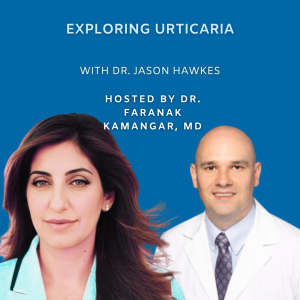
In this episode of the Future of Dermatology Podcast, we revisit the 2024 SF Derm Society's Annual Conference where Dr. Jason Hawkes discusses the complexities of urticaria, including its definitions, types, and the role of mast cells in the condition. This presentation highlights the differences between acute and chronic urticaria, the importance of understanding autoimmunity in relation to urticaria, and the latest treatment approaches, including innovative therapies like Omalizumab. The episode concludes with a call to action for dermatologists to embrace the treatment of urticaria and engage with their patients effectively.
Takeaways
- Urticaria is often misunderstood, but it has exciting aspects to explore.- Acute urticaria lasts less than six weeks, while chronic urticaria lasts longer.- Chronic spontaneous urticaria (CSU) is often idiopathic and can last for years.- Mast cells play a central role in the pathophysiology of urticaria.- Autoimmunity is a common theme in patients with urticaria, especially in women.- Diagnosis of urticaria is primarily clinical, with no specific lab tests required.- Many patients do not respond to standard antihistamine treatments.- Omalizumab is a powerful treatment option for chronic urticaria.- Anaphylaxis is rare in patients treated with Omalizumab for urticaria.- Dermatologists should feel confident in treating urticaria with available therapies.
Chapters
00:00 - Introduction to the Future of Dermatology Podcast00:57 - Understanding Urticaria: Definitions and Types03:50 - Differentiating Acute and Chronic Urticaria06:13 - The Role of Mast Cells in Urticaria09:03 - Autoimmunity and Urticaria: Comorbidities and Testing10:59 - Diagnosis and Treatment Approaches for Urticaria13:52 - Innovative Therapies: Omalizumab and Beyond15:42 - Conclusion and Call to Action

Tuesday Apr 15, 2025
Tuesday Apr 15, 2025
Summary
In this episode of The Future of Dermatology podcast, host Dr. Faranak Kamangar welcomes back Payton Smith, Chandler Johnson, and Kathryn Haran who share their experiences and insights from the match process. They discuss the challenges of applying to dermatology, the importance of building connections, and the emotional landscape of matching. The conversation also covers practical advice for future applicants, including the significance of away rotations, interview preparation, and the unique challenges of couples matching. The episode concludes with an optimistic look at the future of dermatology and the exciting opportunities that lie ahead for the new residents.
You can view the Guide for Dermatology Applicants by Dr. Jennifer Fernandez here: https://docs.google.com/document/d/1q9LMm6Iqyc0x39CtprqaIXmxRL_6f8Rxmalfs9LegEE/edit?usp=drive_link
Takeaways
- The match process for dermatology is highly competitive.- Building a support network is crucial for success.- Away rotations can be both beneficial and exhausting.- Interview preparation is essential for standing out.- Being yourself is key during the application process.- Couples matching adds complexity but can be navigated successfully.- Research projects should reflect your passions and interests.- Maintaining mental health during the application process is important.- Networking within the dermatology community is vital.- The future of dermatology is bright with many opportunities.
Chapters
00:00 - Introduction to the Future of Dermatology Podcast00:50 - Match Day Excitement and Personal Journeys02:57 - Statistics and Insights on Dermatology Match Rates06:08 - Navigating the Emotional Landscape of Matching09:10 - Advice for Future Applicants: Building Connections11:55 - Lessons Learned: What Not to Do During Applications15:00 - The Importance of Interview Preparation17:56 - The Role of Away Rotations in Residency Applications20:56 - Research Projects and Their Impact on Applications23:49 - Couples Matching: Challenges and Strategies27:10 - The Future of Dermatology: Excitement and Opportunities

Tuesday Apr 08, 2025
Tuesday Apr 08, 2025
Summary
In this episode of the Future of Dermatology Podcast, Dr. Faranak Kamangar and Dr. Errol Craig delve into the often-overlooked topic of scabies. They explore its historical context, transmission dynamics, and the psychological impact of the condition on patients. The conversation highlights the importance of understanding scabies as a community health issue, the challenges in diagnosis and treatment, and the need for new approaches in dermatology. Dr. Craig shares insights from his book, 'The Itch: Scabies', and discusses the future of scabies treatment, including potential new medications and diagnostic techniques.
You can find Dr. Craig's book on Amazon: https://www.amazon.com/Itch-Scabies-Errol-Craig-ebook/dp/B0B15HYX84/
Takeaways
- Scabies has a rich history that is often overlooked in medical education.- Transmission of scabies is primarily through close contact, not fomites.- The burden of scabies is significant, especially in tropical and developing regions.- Post-scobetic dermatitis is a common issue after treatment.- Community treatment is essential for effective scabies management.- Ivermectin and permethrin are commonly used treatments, but resistance is a concern.- Dermatoscopy is a valuable tool for diagnosing scabies.- The psychological impact of scabies on patients is profound and often irrational.- New diagnostic techniques and treatments for scabies are on the horizon.- Understanding the evolutionary fear of itch can help in patient care.
Chapters
00:00 - Introduction to Dermatology and Scabies01:25 - The Fascinating History of Scabies04:53 - Understanding Transmission and Contagion09:36 - The Burden of Scabies in Different Populations12:02 - Diagnosis and Treatment Approaches18:09 - Community Approach to Scabies Treatment20:24 - The Evolutionary Fear of Itch22:08 - Future Directions in Dermatology and Scabies Treatment
Tuesday Apr 01, 2025
Tuesday Apr 01, 2025
Summary
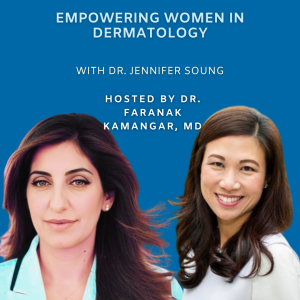
In this episode of The Future of Dermatology Podcast, Dr. Faranak Kamangar interviews Dr. Jennifer Soung, a prominent dermatologist who shares her journey through academia, private practice, and her passion for clinical research. They discuss the importance of personal and professional development, the launch of the LEADderm conference aimed at empowering women in dermatology, and the need for diversity in leadership roles. Dr. Soung emphasizes the significance of mentorship and sponsorship in advancing careers, as well as the challenges of balancing work and family life. The conversation also touches on the future of dermatology, particularly in addressing the holistic health of patients with chronic skin conditions.
Visit https://www.leadderm.org/ to learn more about the upcoming conference.
Takeaways
- Sharing stories inspires women to achieve great things.- Clinical research provides hope for patients with chronic conditions.- Mentorship and sponsorship are crucial for women's advancement.- Diversity in leadership roles is essential in dermatology.- Personal and professional development should be prioritized.- Work-life balance is about blending responsibilities, not perfection.- The skin reflects overall health and requires holistic care.- Conferences should address important issues in dermatology.- Women need support to navigate leadership challenges.- Collaboration and community are vital for success in dermatology.
Chapters
00:00 - Introduction to the Future of Dermatology Podcast01:39 - Dr. Jennifer Soung's Journey in Dermatology05:52 - The Launch of LEADderm Conference12:00 - Personal and Professional Development in Dermatology20:59 - Navigating Leadership and Gender Dynamics23:01 - Work-Life Balance and Career Paths28:38 - Future Directions in Dermatology