The Future of Dermatology
Join Dr. Faranak Kamangar, MD, every week as she chats with various guests about the future of dermatology. Each week, Dr. Kamangar and her guests cover topics from psoriasis, to eczema, to skin care, to AI, and more. Whether you’re a doctor or a patient, these episodes provide valuable information about your skin and how to navigate the world of dermatology.
Listen on:









Episodes
Tuesday Apr 16, 2024
Tuesday Apr 16, 2024
Summary
In this episode, Dr. Farah Kamangar and Dr. Tina Bhutani discuss the challenges of accessing newer dermatology medications and the importance of proper documentation for prior authorization. They also touch on the use of patient coupons and the requirements set by insurance companies. The conversation highlights the need for clear and thorough notes, including previous treatments and failed therapies. The hosts emphasize the importance of advocating for patients and using all available resources to navigate the access process. They also discuss the potential role of AI in streamlining the prior authorization process.
This episode is sponsored by an educational grant from the company Dermavant.
Takeaways
Accessing newer dermatology medications can be challenging due to the paperwork and prior authorization process.
Patient coupons are available for some medications, but the reasons behind their existence are not always clear. Insurance companies often require documentation of previous treatments and failed therapies before approving newer medications.
Thorough and clear notes are essential for successful prior authorization, including details of previous treatments and justifications for prescribing specific medications.
Advocacy for patients and utilizing available resources can help navigate the access process.
AI has the potential to streamline the prior authorization process and reduce the burden on healthcare providers.
Tuesday Apr 09, 2024
Tuesday Apr 09, 2024
Summary
In this episode, Dr. Farah Kamangar and Dr. Tina Bhutani discuss the efficacy and safety of Tapinarof, a non-steroidal topical therapy for psoriasis and atopic dermatitis. They highlight the impressive results of clinical trials, with 35-40% of psoriasis patients achieving clear or almost clear skin after 12 weeks of treatment. They also discuss the potential benefits of Tupinarof for atopic dermatitis patients. The side effects of folliculitis and headaches are mentioned, but overall, patients tolerate the medication well. The episode concludes with a discussion on the future of Tapinarof, including potential pediatric indications.
This episode is sponsored by an educational grant from the company Dermavant.
Takeaways
Tapinarof is a non-steroidal topical therapy that has shown impressive efficacy in treating psoriasis, with 35-40% of patients achieving clear or almost clear skin after 12 weeks of treatment.
The medication is also being studied for its effectiveness in treating atopic dermatitis, with early data showing promising results.
Common side effects of Tapinarof include folliculitis and headaches, but overall, patients tolerate the medication well.
The future of Tapinarof may include pediatric indications, which would be beneficial for parents looking for non-steroidal treatment options for their children.
Gentle skincare techniques and moisturization may also play a role in managing psoriasis and improving skin barrier function.
Tuesday Apr 02, 2024
Tuesday Apr 02, 2024
Summary
In this episode of the Future of Dermatology podcast, Dr. Farah Kamangar and Dr. Tina Bhutani discuss the mechanism of action of aryl hydrocarbon receptors (AHR) and its potential in dermatology. They explore the history of AHR and its connection to coal tar, as well as its role in inflammation, antioxidant activity, and metabolism. They also touch on the importance of considering the impact of circadian rhythms and sleep on skin health. The conversation highlights the potential of AHR-targeted therapies in achieving longer remissions and the need to view psoriasis patients as a whole, addressing comorbidities and environmental factors. The episode concludes with a discussion on the future of dermatology, including the possibility of directly targeting resident memory T cells and the further exploration of AHR mechanisms.
This episode is sponsored by an educational grant from the company Dermavant.
Takeaways
Aryl hydrocarbon receptors (AHR) have a complex mechanism of action and can have anti-inflammatory, antioxidant, and metabolic effects.
AHR-targeted therapies, such as tofacitinib, have shown promise in achieving longer remissions in psoriasis patients.
Considering the impact of circadian rhythms and sleep on skin health is important, as sleep loss can increase inflammation and affect skin diseases.
Psoriasis patients should be viewed as a whole, addressing comorbidities and environmental factors.
The future of dermatology may involve directly targeting resident memory T cells and further exploring the mechanisms of AHR.
AHR-targeted therapies may offer new possibilities for treating inflammatory skin diseases and achieving longer remissions.
Chapters
00:00 Introduction
02:24 Understanding the Mechanism of Action of Aryl Hydrocarbon Receptors
09:07 The Impact of Circadian Rhythms and Sleep on Skin Health
12:43 Viewing Psoriasis Patients as a Whole
16:39 The Potential of AHR-Targeted Therapies in Achieving Longer Remissions
22:35 Exploring the Mechanisms of Aryl Hydrocarbon Receptors
Wednesday Mar 27, 2024
Wednesday Mar 27, 2024
Summary
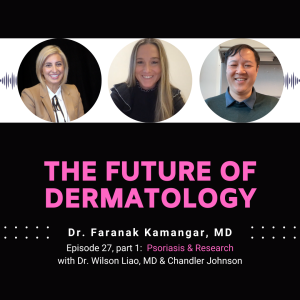
In this follow up episode, Dr. Wilson Liao shares insights on the benefits of a research year for medical students and offers advice on transitioning back to medical school. He and SFDS Med Student, Chandler Johnson, also discuss the future of dermatology and the role of team science in advancing research.
Takeaways
A research year provides medical students with valuable skills and insights into the field of dermatology.
Transitioning back to medical school requires a clinical refresher and practicing essential clinical skills.
Team science and collaboration are key to advancing dermatology research and finding better treatments for patients.
Tuesday Mar 26, 2024
Tuesday Mar 26, 2024
Summary
In this episode, Dr. Wilson Liao discusses the genetics and environmental triggers of psoriasis. He highlights the significant progress made in identifying psoriasis genes and how they relate to the different types and severity of psoriasis. Dr. Liao also explores the connection between psoriasis genes and therapeutic response, as well as the potential for precision medicine in psoriasis treatment. The conversation delves into the evolutionary persistence of psoriasis and its survival advantage in fighting off viruses. The role of environmental triggers, such as obesity, diet, and smoking, is also examined. Additionally, Dr. Liao and Chandler Johnson discuss their current research studies, including the Skin Tracker Project and capillary blood testing. In this conversation, Dr. Wilson Liao and Chandler Johnson discuss various research projects and clinical trials in dermatology. They explore the use of RNA and proteins in research, the importance of studying multiple aspects of autoimmune disease, and ongoing psoriasis survey studies. They also delve into the impact of menopause on psoriasis and the relationship between sleep and psoriasis.
Takeaways
Significant progress has been made in identifying over 100 psoriasis genes, which has led to a better understanding of the different types and severity of psoriasis.
Genetic testing can help predict therapeutic response and guide treatment decisions, with the potential for precision medicine in psoriasis.
Psoriasis genes may have persisted evolutionarily due to their role in fighting off viruses, as seen in the similarities between psoriasis patients and HIV non-progressors.
Environmental triggers, such as obesity, diet, and smoking, can contribute to the development and severity of psoriasis.
Current research studies, including the Skin Tracker Project and capillary blood testing, aim to improve accessibility to clinical trials and provide insights into the molecular mechanisms of psoriasis. Research in dermatology involves studying RNA, proteins, and multiple aspects of autoimmune disease.
Psoriasis survey studies are being conducted to explore the impact of menopause and sleep on psoriasis.
Help us understand how psoriasis affects you
Help Us Understand More About Sleep and Psoriasis Are you interested in helping researchers understand how psoriasis and sleep are related?
Please consider taking our paid online survey. Recruiting both individuals with and without psoriasis. https://redcap.ucsf.edu/surveys/?s=RLFR379LNL4RFTTF
Help Us Understand About Menopause and Psoriasis Are you interested in helping researchers understand how psoriasis and menopause are related?
Please consider taking our paid online survey. Recruiting post-menopausal women with psoriasis. https://redcap.ucsf.edu/surveys/?s=JYTNX3XKDC84J3DX
Tuesday Mar 19, 2024
Tuesday Mar 19, 2024
Summary:
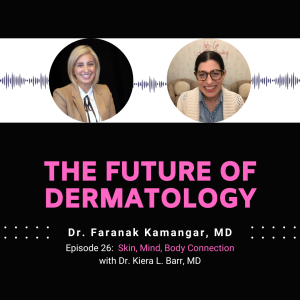
Dr. Keira Barr, MD, shares her non-traditional journey in dermatology and her focus on the mind-body connection in skin health. She discusses the harmful phrase "anti-aging" and the need to shift the conversation to a more positive and empowering approach. Dr. Barr also highlights the challenges and complexities of cosmetic dermatology consultations and the importance of addressing the psychological aspects of these procedures. She emphasizes the connection between mental health and skin health, particularly in relation to stress and trauma. Dr. Barr advocates for a more holistic and personalized approach to dermatology, incorporating mind-body techniques and personalized medicine. In this conversation, Dr. Keira Barr discusses the importance of skin health and provides insights into common skin conditions, prevention and treatment methods, and the role of skin care products. She also emphasizes the importance of skin cancer awareness and highlights the connection between skin health and overall well-being.
Takeaways:
The phrase 'anti-aging' is harmful and should be replaced with a more positive and empowering approach to aging.
Cosmetic dermatology consultations require addressing the psychological aspects of the procedures and understanding the motivations behind them.
The mind-body connection is crucial in dermatology, as stress and trauma can impact skin health.
Physicians need to prioritize building a connection with their patients and addressing their mental and emotional well-being.
The future of dermatology lies in a more holistic and personalized approach, incorporating mind-body techniques and personalized medicine. Maintaining healthy skin is essential for overall well-being.
Common skin conditions can be effectively prevented and treated with proper care. Choosing the right skin care products is crucial for maintaining skin health.
Regular skin cancer screenings and awareness are important for early detection and treatment.
Skin health is interconnected with overall physical and mental well-being.
Learn more from Dr. Barr at:
Website: drkeirabarr.com
Skincare Quiz: yourskincarequiz.com
Podcast: The Skinny Dipping Rx: https://podcasts.apple.com/us/podcast/the-skinny-dipping-rx/id1635601527
Instagram: @drkeirabarr
Tuesday Mar 12, 2024
Tuesday Mar 12, 2024
Summary
In this episode, Dr. Farah Kamangar discusses the effects of alcohol on the skin. She highlights the importance of considering alcohol consumption as a potential factor in dermatological conditions such as rosacea, eczema, and psoriasis. Dr. Kamangar also explains the guidelines for alcohol consumption and emphasizes the need to follow them to maintain skin health. Additionally, she explores the impact of alcohol on the immune system and its contribution to skin aging.
Takeaways
Alcohol consumption can lead to various skin conditions, including rosacea, eczema, and psoriasis.
It is important to understand the guidelines for alcohol consumption and follow them to maintain skin health.
Excessive alcohol intake can weaken the immune system and increase the risk of skin cancers.
Alcohol can contribute to premature aging of the skin.
Chapters
00:00
Introduction
00:32
Alcohol and its effects on the skin
03:14
Guidelines for alcohol consumption
04:10
Effects of alcohol on the skin
05:02
Alcohol and rosacea
06:28
Alcohol and other skin conditions
08:23
Alcohol and immune system
09:19
Alcohol and aging
09:49
Conclusion
Tuesday Mar 05, 2024
Tuesday Mar 05, 2024
Summary
In this episode of the Future of Dermatology Podcast, Dr. Faranak Kamangar discusses the shift from anti-aging to longevity in the field of dermatology. She explores the changing beauty standards and the desire to look more youthful and functionally enhanced. Dr. Kamangar also delves into the causes of aging, such as the fibroblast collapse theory, and the importance of behavioral changes and topical treatments for anti-aging. She highlights the role of retinoids in collagen production and introduces emerging therapies for anti-aging, including mTOR inhibitors and senolytics. The episode concludes with a discussion on the controversies surrounding the diagnosis of aging.
Takeaways
The focus in dermatology has shifted from anti-aging to longevity and health span.
Behavioral changes, such as sun protection and stress reduction, are important for anti-aging.
Topical treatments like retinoids can stimulate collagen production and improve skin health.
Emerging therapies, including mTOR inhibitors and senolytics, show promise in anti-aging research.