The Future of Dermatology
Join Dr. Faranak Kamangar, MD, every week as she chats with various guests about the future of dermatology. Each week, Dr. Kamangar and her guests cover topics from psoriasis, to eczema, to skin care, to AI, and more. Whether you’re a doctor or a patient, these episodes provide valuable information about your skin and how to navigate the world of dermatology.
Listen on:









Episodes
Tuesday Jun 11, 2024
Tuesday Jun 11, 2024
Summary:
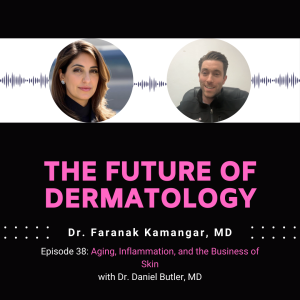
Dr. Daniel Butler, a board-certified dermatologist and assistant dean of student affairs at the University of Arizona College of Medicine, discusses his research on aging skin and inflammatory diseases. He explores how aging independently becomes a risk factor for certain skin diseases and how age can affect access to medications. Dr. Butler emphasizes the need to understand the unique challenges and presentations of skin diseases in older adults. He also discusses the importance of dermatologists having a presence on social media to engage with patients and provide credible information.
Takeaways:
Aging independently becomes a risk factor for certain skin diseases and can affect how these diseases manifest in older adults.
Access to medications can be more challenging for older adults, and age can be a modifiable risk factor in healthcare delivery.
Dermatologists need to understand the unique challenges and presentations of skin diseases in older adults and avoid making assumptions based on age.
Having a presence on social media allows dermatologists to engage with patients, provide credible information, and bridge the gap between academic knowledge and what is available on social media.
The future of dermatology includes targeted therapies for various skin diseases and equipping the next generation of dermatologists with the skills to change lives.
Chapters:
00:00 - Introduction and Background of Dr. Daniel Butler
02:01 - Research on Aging Skin and Inflammatory Diseases
06:16 - Understanding the Mechanisms of Aging Skin
10:54 - The Role of Dermatologists on Social Media
15:23 - Should Academic Physicians be on Social Media?
29:15 - The Future of Dermatology: Targeted Therapies and Next Generation Dermatologists
Tuesday Jun 04, 2024
Tuesday Jun 04, 2024
Summary
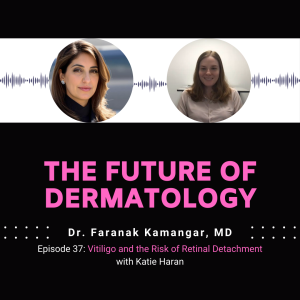
In this episode, Dr. Faranak Kamangar and Katie Haran, UCSF med student, explores the relationship between vitiligo and retinal detachment, the implications for treatment, and the potential risks associated with certain medications. It also delves into the similarities between the eyes and skin, the impact of melanin on ocular health, and the need for extensive health monitoring for individuals with vitiligo. The discussion raises questions about the future of dermatology and the importance of understanding the mechanisms of vitiligo and its associated ocular pathologies.
Takeaways:
The relationship between vitiligo and retinal detachment raises questions about the need for more aggressive treatment and extensive health monitoring for individuals with vitiligo.
The use of Afamelanotide for genetic diseases, weight loss, and skin tanning is not recommended due to potential risks and lack of regulation. - The conversation highlights the similarities between the eyes and skin, particularly in relation to melanin and its impact on ocular health.
The discussion prompts consideration of the future of dermatology, the need for a deeper understanding of vitiligo mechanisms, and the implications for ocular pathologies associated with melanin-related conditions.
Chapters:
00:00 - Introduction to the Future of Dermatology Podcast
01:22 - The Link Between Vitiligo and Retinal Detachment
05:25 - Understanding Vitiligo and Oculocutaneous Albinism
09:05 - The Mechanisms of Vitiligo and Ocular Pathologies
25:45 - Melanin: Uncovering the Similarities Between Eyes and Skin
26:22 - The Future of Dermatology: Understanding Vitiligo Mechanisms and Ocular Pathologies

Tuesday May 28, 2024
Tuesday May 28, 2024
Summary
In this episode, Dr. Farah Kamangar is joined by Payton Smith, a third-year medical student, and Dr. Mitch Davis, who recently matched into a dermatology residency program. The conversation delves into the dermatology application process, the challenges, and the experiences of medical students and residents. It also explores the importance of mentorship, the impact of failure, and the future of dermatology in terms of targeted therapies and AI. The guests share their personal journeys, challenges, and the value of perseverance in pursuing a career in dermatology.
Takeaways
The dermatology application process is challenging and requires perseverance and dedication.
Mentorship and networking play a crucial role in navigating the application process and building a successful career in dermatology.
The impact of failure and the importance of not fearing it, but rather using it as a learning experience and a stepping stone to success.
The future of dermatology holds promise with the development of targeted therapies and the potential role of AI in diagnosis and treatment.
Personal experiences and challenges shared by medical students and residents highlight the value of resilience and determination in pursuing a career in dermatology.
Tuesday May 21, 2024
Tuesday May 21, 2024
Summary:
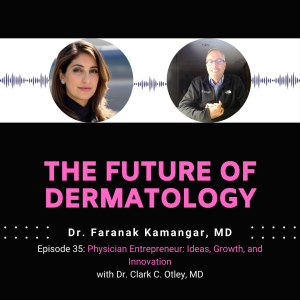
Dr. Clark Otley discusses the importance of physician involvement in the development of devices and technology in dermatology. He shares his experiences in innovation and business development at Mayo Clinic, highlighting the process of bringing ideas from ideation to market. Dr. Otley also introduces the Mayo Clinic Platform, a digital innovation platform that aims to assist entrepreneurs and innovators in the field of digital healthcare technology. He emphasizes the potential of AI in dermatology and the importance of physicians being at the forefront of technological advancements.
Takeaways:
Physicians should be actively involved in the development of devices and technology in dermatology to ensure they meet the needs of clinicians and patients.
The process of bringing an idea from ideation to market involves ideation, prototyping, testing, FDA approval, and developing a business model.
The Mayo Clinic Platform is a digital innovation platform that connects innovators and entrepreneurs in digital healthcare technology with the tools, data, and expertise they need.
AI has the potential to revolutionize dermatology by improving diagnostics, prognostics, and therapeutics, and optimizing practice management.
Physicians can prevent burnout and find fulfillment by engaging in innovation and staying at the forefront of technological advancements in dermatology.
Chapters
00:00 - Introduction and Background of Dr. Clark Otley
04:15 - The Process of Bringing Ideas from Ideation to Market
09:54 - The Mayo Clinic Platform for Digital Healthcare Innovation
13:45 - The Potential of AI in Dermatology
Tuesday May 14, 2024
Tuesday May 14, 2024
Summary
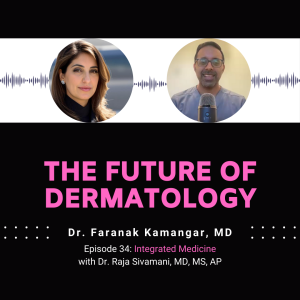
Dr. Raja Sivamani, MD, MS (Bioengineering), AP, discusses his transition from academia to private practice and the importance of integrative medicine in dermatology. He shares his experience in running a clinical trials unit and the benefits of seeing Medi-Cal patients. Dr. Raja Sivamani also talks about Learn Skin, an online platform for dermatology education, and the future of dermatology, including the role of AI and the need for an open mind.
Takeaways
Transitioning from academia to private practice can provide more freedom and opportunities for innovation.
Integrative medicine, including nutrition and lifestyle approaches, is an important aspect of dermatology.
Running a clinical trials unit can be efficient and impactful, especially when combined with a successful practice. Learn Skin is an online platform that offers dermatology education with an integrative spin.
The future of dermatology involves embracing AI and collaborating with other healthcare professionals.
Continuing education and keeping an open mind are essential for staying up-to-date in the field.
Chapters
00:00 - Introduction and Background
03:19 - Transitioning from Academia to Private Practice
06:08 - The Benefits of Private Practice
09:23 - Considerations for Starting a Private Practice
13:38 - Running a Clinical Trials Unit
21:56 - The Future of Dermatology
Tuesday May 07, 2024
Tuesday May 07, 2024
Summary
Janelle Ball, the CEO and founder of BC Educators, discusses the importance of having a dedicated biologic coordinator in dermatology offices to streamline the prior authorization process for specialty medications. She emphasizes the need for proper documentation and education to ensure patients have access to the medications they need. BC Educators offers virtual coordinators and training to support offices in this role. Janelle also highlights the challenges of navigating insurance requirements and the importance of collaboration and networking among coordinators. She sees the future of dermatology involving more biologics and specialty medications, making the role of the biologic coordinator even more crucial.
Takeaways:
Having a dedicated biologic coordinator in dermatology offices can streamline the prior authorization process for specialty medications. Proper documentation and education are essential for ensuring patients have access to the medications they need. BC Educators offers virtual coordinators and training to support offices in the role of the biologic coordinator. Collaboration and networking among coordinators can help navigate insurance requirements and share best practices. The future of dermatology will likely involve more biologics and specialty medications, making the role of the biologic coordinator even more crucial.
Chapters
00:00 Introduction and Background
06:45 Streamlining Workflow in Dermatology Offices
12:47 The Role of the Biologic Coordinator
23:20 The Future of Dermatology
Tuesday Apr 30, 2024
Tuesday Apr 30, 2024
Summary
Dr. Farah Kamangar interviews Dr. Whitney Tolpinrud, the Medical Director at Curology, a personalized skincare service. They discuss the journey that led Dr. Tolpinrud to her current position and the inefficiencies of traditional clinical practice. They also explore the founding of Curology and its mission to provide accessible and personalized dermatological care through telemedicine. Dr. Tolpinrud shares her experience as the Medical Director and the various aspects of her role, including product development, marketing, and clinical research. They discuss the future of dermatology, emphasizing the importance of personalized medicine and the integration of technology, such as AI, into medical practice.
Takeaways
Traditional clinical practice can be inefficient and limit the number of patients that can be seen.
Telemedicine offers a more scalable and accessible solution.
Curology is a personalized skincare service that provides telemedicine consultations and customized prescription treatments.
The company was founded by a dermatologist and focuses on treating conditions like acne through a telemedicine platform.
Dr. Tolpinrud serves as the Medical Director at Curology and is involved in product development, marketing, clinical research, and maintaining high medical standards.
The future of dermatology involves personalized medicine, utilizing individual bio data and genetics, as well as the integration of technology, such as AI, into medical practice.
Chapters
00:00 - Introduction and Background
05:07 - Curology: Personalized Skincare through Telemedicine
11:35 - The Future of Dermatology: Personalized Medicine and Technology
Tuesday Apr 23, 2024
Tuesday Apr 23, 2024
Summary
Dr. Tina Bhutani shares her journey to becoming a dermatologist and the challenges she faced along the way. She emphasizes the importance of being proactive in interviews and marketing oneself effectively. Dr. Bhutani also discusses the rewards and challenges of working in an academic setting, including the bureaucracy and administrative burdens. She highlights the significance of clinical trials and her interest in studying lifestyle modifications and their impact on skin disease. However, she acknowledges the difficulty of getting funding for these types of studies. In this conversation, she discusses her busy life as a dermatologist and the importance of patient-centered research and accessible clinical trials. Dr. Bhutani and Dr. Fara also talk about Dr. Bhutani's book that she co-authored on the use of biologics in psoriasis treatment. The conversation covers various chapters of the book, including laboratory monitoring, TNF-alpha inhibitors, IL-17 class of biologics, combination therapies, biologic agents for pediatric psoriasis, special site psoriasis, comparing biologic agents, long-term registry data, biologic agents in special populations, and adherence to biologic therapy. Dr. Fara and Dr. Bhutani emphasize the importance of individualizing treatment and having open conversations with patients about their preferences and needs.
Takeaways
Be proactive in interviews and market yourself effectively
Working in an academic setting has rewards and challenges
Clinical trials are important for providing access to treatments
Studying lifestyle modifications and their impact on skin disease is valuable
Obtaining funding for non-traditional studies can be challenging
Patient-centered research and accessible clinical trials are important for improving dermatology treatments
Dr. Bhutani's book on the use of biologics in psoriasis treatment provides practical guidance and evidence-based recommendations
TNF-alpha inhibitors are still valuable in psoriatic arthritis treatment
IL-17 class of biologics work quickly and are effective for tough-to-treat areas
Combination therapies can be beneficial for patients who have already tried monotherapy
Treating special site psoriasis is important for improving quality of life and preventing comorbidities
Comparing biologic agents is challenging due to individual patient factors and access issues
Long-term registry data provides reassurance about the safety and efficacy of biologic agents
Special populations, such as pregnant women and the elderly, require careful consideration in biologic therapy
Adherence to biologic therapy is crucial, and treatment should be tailored to individual patient preferences and needs
Chapters
00:00 Introduction and Background
08:39 Navigating the Challenges of an Academic Setting
29:27 The Value of TNF-alpha Inhibitors in Psoriatic Arthritis
36:04 Comparing Biologic Agents: Challenges and Considerations